
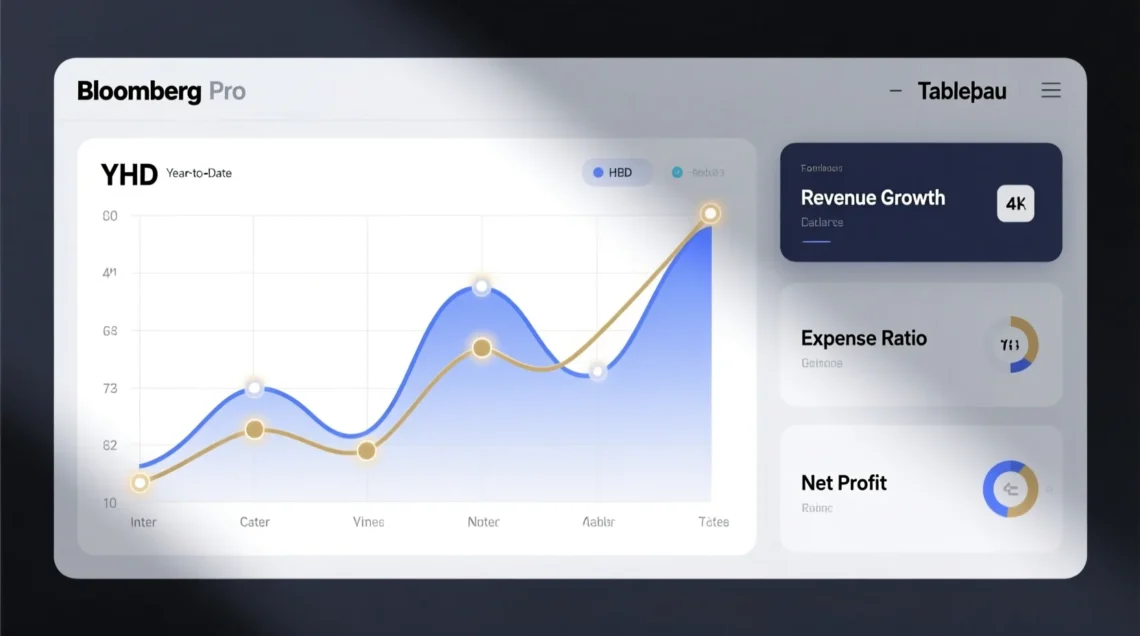
The first time I saw “YTD” on a financial report, I had no idea what it meant. It looked important — charts were moving, numbers were highlighted — but I couldn’t decode it. Later, I learned it was one of the most common tracking terms in finance, payroll, banking, and performance reporting.
If you’re here wondering what “Year to Date” means, you’re not alone. It’s a simple concept, but people often misunderstand when it starts, what it includes, and how it’s used across different industries.
This guide breaks it all down clearly.
🧠 What Does Year to Date Mean?
Year to Date, often written as YTD, refers to the period starting from January 1 of the current year up to today’s date.
It is used to measure performance, income, spending, progress, profits, growth, or any other measurable activity within the current year.
✔ Simple Definition:
Year to Date = January 1 → Today
✔ Example Sentence:
“Our profits are up 12% year to date.”
✔ In Short:
YTD = Year to Date = Total activity from the beginning of the year until now
📅 What YTD Includes (and Doesn’t Include)
✔ INCLUDED:
- January 1
- Every month up to the current date
- All recorded income, expenses, and performance metrics
❌ NOT INCLUDED:
- Future months
- Previous years
- Forecasts or predictions
📱 Where Is “Year to Date” Commonly Used?
You’ll see YTD or Year to Date in:
🏦 Financial Reports
- Company earnings
- Investment returns
- Stock performance
🧾 Payroll Documents
- YTD earnings
- YTD taxes paid
- YTD deductions
📉 Bank Statements
- Interest earned
- Total deposits
- Total withdrawals
🧮 Business Performance Tracking
- Sales
- Revenue
- Expenses
- Profit margins
💼 Personal Finance Tools
- Budgeting apps
- Expense trackers
- Tax calculators
Tone
Formal, financial, and analytical, but commonly used even among non-experts.
🗣 Examples of “Year to Date” in Real Conversations
✔ Conversations in the Workplace
A: How are this quarter’s sales?
B: Year to date, we’re up 18%.
A: What’s our YTD revenue?
B: Around $2.3 million.
✔ Personal Finance
A: How much have you earned so far?
B: My YTD income is $29,500.
✔ Banking
A: Why did my bank show YTD interest?
B: That’s total interest earned this year so far.
✔ Taxes
A: Why do my pay stubs show YTD taxes?
B: They track how much tax you’ve paid since January.
✔ Investments
A: Is the fund doing well?
B: Year to date, it’s up 7.4%.
🕓 When to Use and When NOT to Use “Year to Date”
✅ When to Use
- When comparing performance over the current year
- When tracking income for tax filing
- When checking business revenue
- When analyzing stock market growth
- When summarizing annual progress so far
- When reporting professional real-time performance
❌ When NOT to Use
- For previous years
- For forecasting future performance
- For monthly or quarterly-only data
- In casual conversations unrelated to performance
- To describe something unrelated to measurable progress
📊 Comparison Table: YTD vs Similar Terms
| Term | Meaning | Best Used For |
|---|---|---|
| YTD (Year to Date) | Jan 1 → Today | Annual progress tracking |
| QTD (Quarter to Date) | Start of quarter → Today | Quarterly performance |
| MTD (Month to Date) | First of month → Today | Monthly results |
| YOY (Year Over Year) | This year vs same time last year | Growth comparison |
| FYTD (Fiscal Year to Date) | Start of fiscal year → Today | Companies with non-Jan fiscal years |
🔎 Why “Year to Date” Is Important
✔ Tracks real-time performance
You can see how well you’re doing this year.
✔ Helps with budgeting
Know how much you’ve earned, spent, or saved.
✔ Important for taxes
Shows how much income and tax is recorded so far.
✔ Useful in business decisions
Helps compare current performance vs goals.
✔ Popular in stock market analysis
Investors use it to track growth and losses.
📈 Practical Examples of YTD Calculations
Let’s say today is October 20.
📘 Example 1: YTD Salary
If you earn $3,500 monthly:
YTD salary (Jan–Oct) = $3,500 × 10 = $35,000
📘 Example 2: YTD Sales
If your shop sold:
- Jan: $8,000
- Feb: $9,500
- Mar: $11,200
- …
- Oct: $14,900
Then your YTD sales = sum of all months through Oct
📘 Example 3: YTD Investment Return
If your investment grew:
- 5% in March
- 2% in June
- 3% in September
Your YTD return = total combined performance across the year, not just the sum.
🔄 Similar Terms or Alternatives
| Term | Meaning | When to Use |
|---|---|---|
| MTD | Month to Date | Short-term metrics |
| QTD | Quarter to Date | Quarterly results |
| YOY | Year Over Year | Growth comparison |
| TTM | Trailing Twelve Months | Last 12 months, not calendar year |
| FYTD | Fiscal Year to Date | Businesses with fiscal years |
🙋 FAQs
1. What does Year to Date start from?
January 1 of the current year.
2. Does YTD include future dates?
No — only up to today.
3. Does every company use Jan 1 for YTD?
No. Companies using a fiscal year use FYTD instead.
4. Why does my pay stub show YTD?
To track your income, taxes, and deductions for the year.
5. Does YTD help with taxes?
Yes, it shows how much tax you’ve already paid.
6. What’s the difference between YTD and YOY?
YTD shows this year’s progress; YOY compares this year to last year.
7. Is YTD used in personal finance?
Yes — budgeting tools use it frequently.
📝 Mini Quiz — Test Your Understanding!
1. What does YTD stand for?
a) Year to Division
b) Year to Date ✔
c) Year to Deadline
2. YTD starts on:
a) February 1
b) January 1 ✔
c) December 1
3. Which is a correct YTD usage?
a) “My YTD earnings are $42,900.” ✔
b) “My YTD forecast is next year.”
4. The opposite of YTD (monthly-based) is:
a) MTD ✔
b) LTM
5. YTD should NOT be used when:
a) Talking about yearly performance
b) Forecasting future numbers ✔
📝 Conclusion
Year to Date is one of the simplest and most useful financial terms. It helps track progress from the beginning of the year until today — whether you’re measuring income, sales, investment growth, expenses, or business performance. Understanding YTD gives you a clear view of where you stand financially and professionally at any point in the year.
It’s a tool used by professionals, businesses, investors, and everyday people to make smarter decisions.