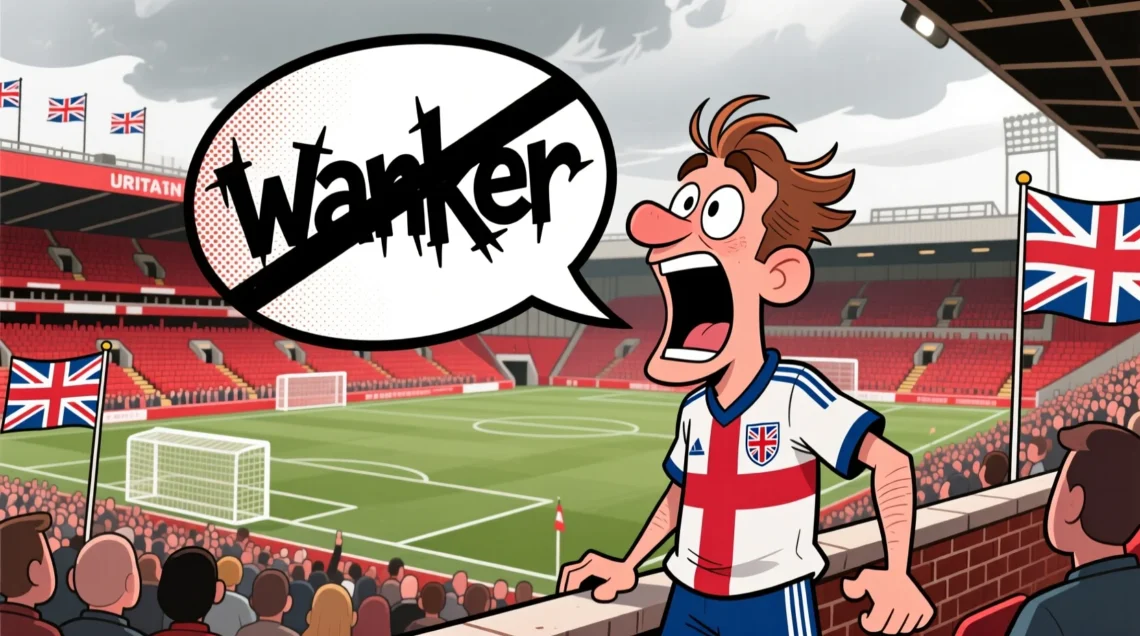
If you’ve ever watched British TV shows, football matches, or UK comedy clips, you’ve probably heard someone shout “Wanker!” at a player, politician, or random person. The first time I heard it in a Premier League match, I thought it sounded funny — until I learned it was actually a strong insult. UK slang is full of colorful words, and “wanker” is one of the most famous (and misunderstood) ones.
If you’re curious about what “wanker” really means, whether it’s rude, how offensive it is, and when Brits actually use it, this guide explains everything clearly — with real examples, cultural context, and tips on when to absolutely avoid saying it.
🧠 What Does “Wanker” Mean?
The slang word “wanker” is a British insult that means:
👉 A brainless, annoying, foolish, arrogant, or unpleasant person.
👉 Basically: a person who behaves like an idiot.
The literal origin is crude, but modern usage is mostly figurative, like calling someone:
- Jerk
- Idiot
- Moron
- Clown
- Fool
✔ Example Sentence:
“Did you see how he cut in line? What a wanker.”
✔ Summary:
Wanker = An offensive UK slang insult meaning a foolish or irritating person.
It’s widely used in the UK, Australia, Ireland, and New Zealand — but much less common in the US.
📱 Where Is “Wanker” Commonly Used?
You’ll mostly hear it in:
🇬🇧 United Kingdom
- Football stadiums
- Pub conversations
- British comedy shows
- Road rage moments
- Casual arguments
- Social media comments
🇦🇺 Australia & New Zealand
Used in the same way — often slightly more humorous and casual.
🎬 Popular Culture
You’ll hear “wanker” in:
- TV shows like Top Gear, The Inbetweeners, Peaky Blinders, Misfits
- Football fan chants
- British YouTube channels
- TikTok and memes
❗ Tone
It’s:
- Informal
- Insulting
- Not appropriate for professional use
💬 Examples of “Wanker” in Real Conversations
Here are natural, authentic UK-style examples:
1
A: he missed an open goal 😭
B: bruv he’s such a wanker sometimes
2
A: that driver nearly hit me
B: classic london wanker behaviour
3
A: he said i’m late when he arrived after me
B: what a proper wanker lol
4
A: you seeing the ref today?
B: absolute wanker mate 💀
5
A: he lied straight to my face
B: yeah that’s a wanker move
6
A: bro just cut the queue 😭
B: wanker alert 🚨
7
A: why did he ghost you?
B: cuz he’s a wanker lmao
🕓 When to Use and When NOT to Use “Wanker”
✅ When You CAN Use It
Use “wanker” only in informal or friendly contexts where strong language is normal:
- Among close friends
- Jokingly roasting someone
- Reacting to someone’s rude behavior
- Watching football matches
- UK-style humor
- Memes, TikTok, banter
It’s often used humorously, depending on tone.
❌ When You Should NEVER Use It
Avoid using “wanker” in:
- Workplaces
- Emails
- Professional messages
- Talking to strangers
- Talking to older or conservative people
- Customer service
- Academic settings
- International business calls
Also avoid using it casually in the US — most Americans either find it weird or misunderstand it.
📊 Comparison Table: “Wanker” vs Alternatives
| Context | Example Phrase | Why It Works / Doesn’t |
|---|---|---|
| UK Friend Chat | “bruv he’s a wanker” | Common & casual |
| Football Fan Chat | “ref’s a wanker” | Very common insult |
| Work Chat | “He’s difficult to work with.” | Professional alternative |
| “There seems to be a misunderstanding.” | Formal & safe | |
| Polite Social Setting | “He was being rude.” | Avoids offensive slang |
🔄 Similar Slang Words or Alternatives
| Slang | Meaning | When to Use |
|---|---|---|
| Prat | Foolish person | Mild insult, UK friendly |
| Git | Annoying person | Less offensive |
| Tosser | Idiot, fool | Similar tone to wanker |
| Muppet | wordless or silly person | Funny, light insult |
| Bellend | Rude/jerk (UK) | Strong insult |
| Idiot | Unintelligent person | Neutral, global |
| Jerk | Rude person | Common in US |
“Wanker” is stronger than prat, git, or muppet, but lighter than c*nt, which is far harsher.
📚 Origin & History of the Word “Wanker”
The term originated in the early 20th century in the UK.
- Started as a crude reference to someone who wastes time
- Evolved into an insult implying someone foolish or contemptible
- Spread through football culture and British TV
Today, it’s used globally thanks to the internet and UK entertainment.
🌍 Cultural Perspectives on “Wanker”
United Kingdom
Very common. Can be harsh or funny depending on tone.
Australia & NZ
Often used humorously.
United States
Sounds British and unusual; many Americans think it’s mild, but Brits consider it moderately offensive.
Europe
Used by English-speaking football fans, especially in Premier League contexts.
🙋 FAQs
1. Is “wanker” a strong insult?
Moderately strong — not the worst, but not mild either.
2. Is it safe to use around British people?
Only among friends or in casual banter. Tone matters.
3. Is “wanker” rude?
Yes — it is considered offensive slang.
4. Can women be called wankers?
Yes — the insult applies to anyone.
5. Can “wanker” be used jokingly?
Yes, especially among UK friends.
6. Is “wanker” used in American English?
Rarely — mostly understood from TV.
7. What’s the American equivalent?
Close equivalents include jerk, idiot, or moron.
📝 Quick Quiz — Test Your Knowledge!
1. “Wanker” is mostly used in which country?
a) USA
b) UK ✔
c) Canada
2. Is “wanker” appropriate in the workplace?
a) Yes
b) No ✔
3. What does “wanker” generally mean?
a) A smart person
b) A foolish or annoying person ✔
4. Which is a similar UK insult?
a) Genius
b) Tosser ✔
c) Legend
5. Is “wanker” stronger than “idiot”?
a) Yes ✔
b) No
📝 Conclusion
The word “wanker” is a classic British insult used to describe someone who is foolish, annoying, arrogant, or rude. While often used humorously in UK banter, it’s still considered offensive slang and should be used carefully — especially outside friendly or informal contexts.
Whether you’re learning UK slang, watching football, or trying to understand British humor, knowing what “wanker” means helps you navigate conversations without accidentally offending someone.
Use it wisely, and only where strong language is acceptable.