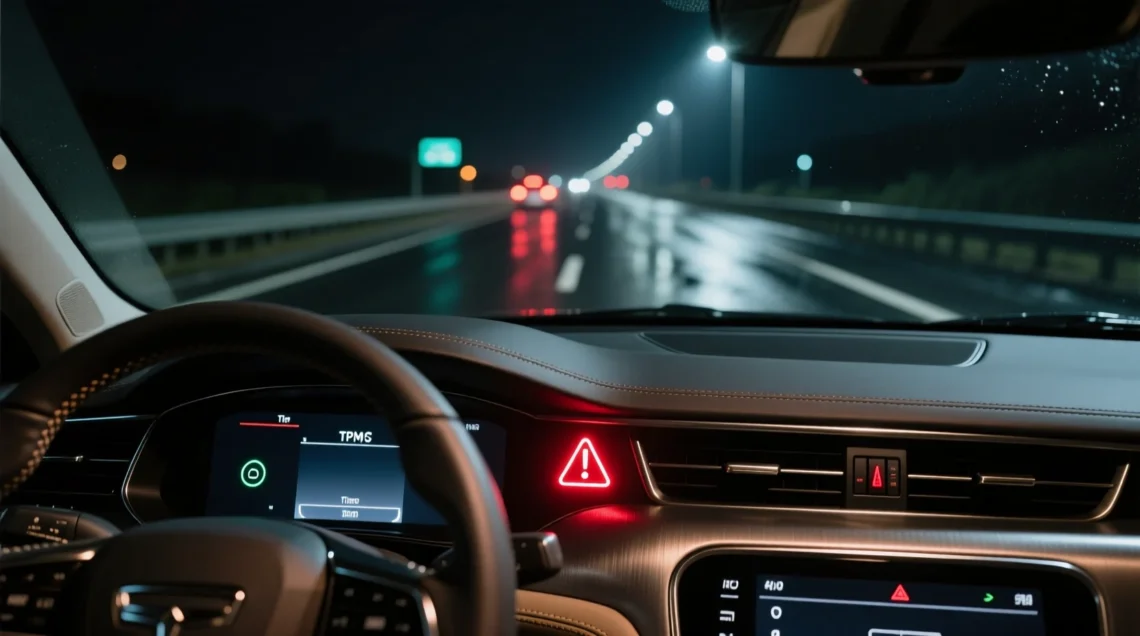
Have you ever been driving peacefully when suddenly a strange symbol lights up on your dashboard usually a flat tire icon with an exclamation mark inside? The first time I saw it, I honestly thought something serious had broken. If you’ve had the same experience, you’re not alone.
Many drivers search what does TPMS mean on a car after seeing that warning light and feeling unsure whether it’s safe to keep driving.
Quick Answer
TPMS means “Tire Pressure Monitoring System.” It’s a safety feature that alerts you when one or more of your tires has low air pressure, helping prevent accidents and tire damage.
🧠 What Does TPMS Mean on a Car?
TPMS (Tire Pressure Monitoring System) is a built-in car system designed to monitor the air pressure inside your tires and warn you when it drops below a safe level.
Low tire pressure can affect:
- Vehicle handling
- Braking distance
- Fuel efficiency
- Tire lifespan
✔ Example Sentence:
“The TPMS light came on, so I checked my tire pressure immediately.”
In short:
TPMS = Tire Pressure Monitoring System = alerts you about low tire pressure.
This system has been standard in most vehicles since 2007 in many countries.
🚨 What the TPMS Warning Light Looks Like
The TPMS warning light usually appears as:
- A horseshoe-shaped tire
- An exclamation mark (!) inside
What it means:
- 🔶 Solid light: One or more tires are under-inflated
- 🔶 Flashing light: TPMS system malfunction
If it stays on after inflating tires, the system may need resetting.
⚙️ How TPMS Works in a Car
There are two main types of TPMS used in vehicles:
🔹 Direct TPMS
- Uses sensors inside each tire
- Measures pressure in real time
- More accurate
- Sensors can need replacement
🔹 Indirect TPMS
- Uses wheel speed sensors
- Estimates pressure based on tire rotation
- Less accurate
- No physical sensors in tires
Comparison Table
| Feature | Direct TPMS | Indirect TPMS |
|---|---|---|
| Accuracy | High | Moderate |
| Sensors | Inside tires | Uses ABS sensors |
| Cost | Higher | Lower |
| Maintenance | Sensor replacement | Minimal |
🕓 When to Take TPMS Seriously (And When Not)
✅ When to Act Immediately
- TPMS light comes on while driving
- Tire feels soft or looks flat
- Steering feels heavy or unstable
- Long highway trips
❌ When It Might Be Temporary
- Sudden temperature drop
- After tire inflation
- After tire rotation
Even then, always double-check tire pressure manually.
⚠️ Why Driving With Low Tire Pressure Is Dangerous
Ignoring TPMS warnings can lead to:
- Tire blowouts
- Poor braking control
- Increased fuel consumption
- Uneven tire wear
- Loss of traction
That small warning light can prevent big accidents.
🔄 TPMS vs Regular Tire Check
| Method | Accuracy | Convenience |
|---|---|---|
| TPMS | Automatic alert | Very convenient |
| Manual gauge | Very accurate | Requires effort |
| Visual check | Low accuracy | Not reliable |
Best practice: Use TPMS alerts + manual checks monthly.
🔁 Common TPMS-Related Terms
| Term | Meaning | When You’ll See It |
|---|---|---|
| PSI | Tire pressure unit | Tire inflation |
| Low Tire Pressure | Under-inflated tire | TPMS alert |
| Sensor Reset | Recalibrating TPMS | After tire service |
| Tire Rotation | Changing tire positions | Maintenance |
| Valve Sensor | Sensor inside tire | Direct TPMS |
🙋 FAQs
1. Can I drive with the TPMS light on?
Yes, but it’s not recommended for long distances.
2. Does TPMS mean I have a flat tire?
Not always. It usually means low pressure, not a full flat.
3. Why does TPMS turn on in winter?
Cold air reduces tire pressure naturally.
4. How do I reset my TPMS light?
Inflate tires to correct PSI, then reset via your car menu or drive for 10–20 minutes.
5. Is TPMS required by law?
Yes, in many countries including the US since 2007.
6. How long do TPMS sensors last?
Typically 5–10 years depending on battery life.
📝 Mini Quiz — Test Your Understanding!
1. What does TPMS stand for?
a) Tire Performance Management System
b) Tire Pressure Monitoring System ✅
c) Tire Power Monitoring Sensor
2. What does a solid TPMS light usually mean?
a) Engine problem
b) Low tire pressure ✅
c) Brake failure
3. Which TPMS type uses sensors inside the tires?
a) Indirect TPMS
b) Direct TPMS ✅
4. Can cold weather trigger TPMS?
a) No
b) Yes ✅
5. Should TPMS replace manual tire checks?
a) Yes
b) No ✅
📝 Conclusion
Understanding what does TPMS mean on a car can save you from unexpected breakdowns, unsafe driving conditions, and costly repairs. The Tire Pressure Monitoring System is a simple yet powerful safety feature that keeps you informed before small tire issues turn into serious problems.
When that warning light appears, don’t panic just check your tires and drive safely.