
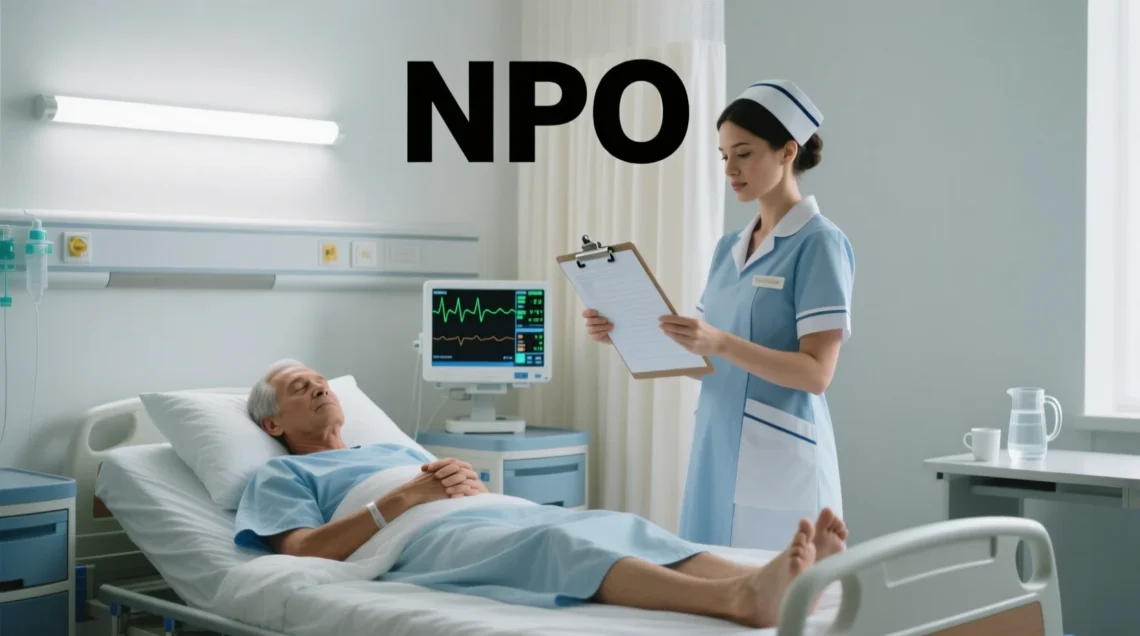
If you’ve ever been admitted to a hospital or visited an emergency room, you may have heard a nurse or doctor say, “The patient is NPO.” Hearing this for the first time can be confusing especially when you’re already stressed or hungry.
Many patients assume NPO is a medical condition, but it’s actually an instruction. This guide explains what NPO means in medical terms, why doctors use it, how long it lasts, real examples, patient FAQs, and common misconceptions all in simple language.
Quick Answer:
NPO means “Nothing by Mouth.” It’s a medical instruction that tells patients not to eat or drink anything, usually before surgery, tests, or certain treatments.
🧠 What Does NPO Mean in Medical Terms?
In medical terms, NPO stands for the Latin phrase “Nil Per Os,” which means “nothing through the mouth.”
When a patient is marked as NPO, they are not allowed to eat or drink anything, including:
- Food
- Water
- Juice
- Tea or coffee
- Sometimes even chewing gum or candy
Example Sentence:
“The doctor ordered the patient to remain NPO before surgery.”
In short:
NPO = Nil Per Os = Nothing by mouth
The focus keyword what does NPO mean in medical terms refers to this exact hospital instruction.
🏥 Why Doctors Put Patients on NPO
Doctors don’t use NPO randomly. It’s done for patient safety.
Common Reasons for NPO Orders:
- Before surgery (to prevent vomiting under anesthesia)
- Before medical procedures (endoscopy, imaging tests)
- Risk of aspiration (food entering the lungs)
- Severe nausea or vomiting
- Bowel rest (digestive system needs a break)
- Emergency situations
If food or liquid enters the lungs during anesthesia, it can cause serious complications, which is why NPO is so important.
🕓 How Long Does NPO Last?
The length of time depends on the situation.
Typical NPO Durations:
- Before surgery: 6–12 hours
- Emergency cases: Until the doctor clears it
- Digestive problems: 24–72 hours
- After surgery: Until bowel function returns
Doctors regularly reassess NPO status and lift it as soon as it’s safe.
💧 Can You Take Medications While NPO?
This is one of the most common questions.
The answer:
✔ Sometimes, yes.
Doctors may allow:
- Essential medications with a small sip of water
- Medications given via IV
- Liquid medications through feeding tubes
Never take medication unless your nurse or doctor confirms it’s allowed while NPO.
📊 NPO vs Clear Liquid Diet (Comparison Table)
| Instruction | What It Means | Allowed Items |
|---|---|---|
| NPO | Nothing by mouth | Nothing at all |
| Clear Liquids | Light fluids only | Water, broth, clear juice |
| Full Liquid Diet | Liquids & soft foods | Milk, soup, smoothies |
| Regular Diet | Normal eating | All foods |
NPO is the strictest diet order in medical care.
🗣 Real-Life Examples of NPO in Hospitals
Example 1
Doctor: “The patient is scheduled for surgery tomorrow. Keep them NPO after midnight.”
Example 2
Nurse: “Until the test is finished, you are not allowed to eat or drink.”
Example 3
Chart note: “While awaiting the results of a CT scan, the individual is still NPO.”
❗ Common Misunderstandings About NPO
❌ NPO means you’re very sick
✔ Not true it’s often temporary.
❌ You can drink water while NPO
✔ False even water is restricted unless approved.
❌ NPO lasts forever
✔ It’s usually short-term.
❌ NPO is a disease
✔ It’s a medical instruction, not a diagnosis.
👨⚕️ Is NPO Used Only in Hospitals?
Mostly yes, but NPO can also be used in:
- Outpatient surgical centers
- Emergency rooms
- Dental procedures with anesthesia
- Diagnostic imaging facilities
Anywhere anesthesia or sedation is involved, NPO rules may apply.
🔄 Related Medical Terms
| Term | Meaning | How It’s Different |
|---|---|---|
| PO | By mouth | Normal eating allowed |
| IV | Intravenous | Fluids given through vein |
| TPN | Total parenteral nutrition | Nutrition via IV |
| Enteral feeding | Tube feeding | Bypasses mouth |
| Aspiration | Food entering lungs | Major reason for NPO |
🙋 FAQs
1. What does NPO mean in medical terms exactly?
It means nothing by mouth no food or drinks.
2. Can I brush my teeth while NPO?
Usually yes, but avoid swallowing water.
3. Why is NPO required before surgery?
To prevent vomiting and aspiration under anesthesia.
4. Can NPO patients drink water?
No, unless the doctor allows it.
5. Is NPO painful or dangerous?
No it’s temporary and meant for safety.
6. Can children or elderly patients be NPO?
Yes, with close medical supervision.
📝 Mini Quiz — Test Your Understanding!
1. What does NPO stand for in medical terms?
a) No Patient Orders
b) Nil Per Os ✅
c) New Patient Option
2. What does NPO mean?
a) Eat lightly
b) Nothing by mouth ✅
c) Drink only water
3. Why are patients kept NPO before surgery?
a) Comfort
b) Weight loss
c) Prevent aspiration ✅
4. Can medications be taken while NPO?
a) Never
b) Only if approved by doctor ✅
5. Is NPO permanent?
a) Yes
b) No ✅
📝 Conclusion
So, what does NPO mean in medical terms? It means nothing by mouth a common and important medical instruction used to protect patients during procedures, surgeries, and emergencies. While it can be uncomfortable, NPO is usually temporary and plays a vital role in patient safety.
If you or a loved one is placed on NPO, always follow medical guidance and ask questions understanding the rule helps make the process easier.