You’ve probably heard someone say, “She’s so neurotic,” or “Stop being neurotic about everything!” Maybe you saw the word online and wondered whether it’s an insult, a personality trait, or a psychological condition.
The first time I saw “neurotic,” I assumed it meant “laughable” — but that’s actually not what it means. The word has a very specific meaning, especially in psychology and personality studies.
If you’re searching for what neurotic means, you’re trying to understand:
- What the word truly refers to
- Whether it’s a personality trait
- Whether it’s harmful, normal, or something else
Let’s break it down clearly.
🧠 What Does Neurotic Mean?
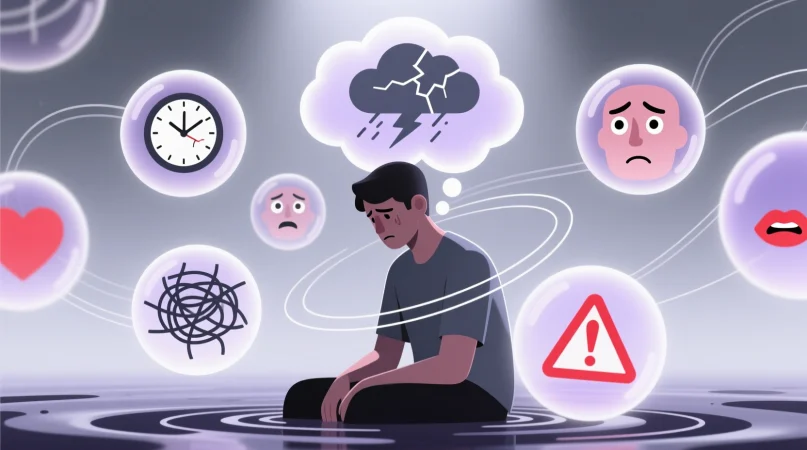
Neurotic describes a person who tends to experience anxiety, worry, moodiness, or emotional instability more easily or more often than others. It is not the same as being mentally ill — it’s considered a personality trait, not a disorder (in modern psychology).
✔ Simple Definition:
Neurotic = Someone who reacts emotionally, worries easily, or is sensitive to stress.
✔ Example in a Sentence:
“He’s a bit neurotic — he overthinks everything and panics quickly.”
✔ Important Note
Being neurotic does not mean someone is “laughable”. It just means they experience emotional ups and downs more intensely.
In short:
Neurotic = high emotional sensitivity + higher stress response.
📌 Origins & Psychological Background
Historically, neuroticism came from the term neurosis, used in older psychology to describe mild mental disturbances.
Modern Psychology View:
- Neuroticism is one of the Big Five personality traits
- It is normal, not a disorder
- Ranges from low to high, like any personality trait
People high in neuroticism tend to experience:
- Worry
- Stress
- Overthinking
- Mood shifts
- Self-doubt
People low in neuroticism tend to be:
- Calm
- Stable
- Emotionally steady
📱 Where Is “Neurotic” Commonly Used?
You’ll see the word used in:
⭐ Everyday Life
- Describing a friend who worries too much
- Talking about emotional reactions
- Humor or exaggeration
⭐ Psychology
- Personality tests
- Therapy contexts
- Research papers
⭐ Social Media
- Memes about anxiety
- Self-awareness posts
- Relationship discussions
⭐ TV & Movies
Often used to describe characters who are anxious, dramatic, or reactive.
Tone:
Can be lighthearted, descriptive, or insulting, depending on how it’s said.
🗣 Examples of “Neurotic” in Sentences
✔ Neutral / Describing a Trait
- “She’s neurotic, but she’s also really passionate.”
- “He gets neurotic when deadlines are close.”
✔ Negative / Insulting
- “Stop being so neurotic, it’s not that deep.”
- “She’s too neurotic for this job.”
✔ Psychological / Formal
- “High neuroticism is linked to increased stress sensitivity.”
- “This personality profile indicates moderate neurotic tendencies.”
🔍 Signs of Neurotic Behavior
People who are neurotic often experience:
✔ Emotional Instability
Mood swings, stress, and frustration.
✔ Overthinking
They replay conversations or worry about outcomes.
✔ Sensitivity
Small issues feel big.
✔ Perfectionism
Fear of mistakes or disapproval.
✔ Anticipatory anxiety
Worrying about things before they happen.
✔ Self-consciousness
Feeling easily embarrassed or unsure.
These are not flaws — they’re just traits that vary from person to person.
🔄 Types of Neurotic Tendencies
| Type | Description | Example |
|---|---|---|
| Anxious Neuroticism | Worrying easily | “What if everything goes wrong?” |
| Emotional Reactivity | Strong emotional swings | Crying or panicking quickly |
| Self-Doubt | Feeling unsure even when competent | “I don’t think I’m good enough.” |
| Obsessive Thinking | Thoughts repeating or looping | “Did I lock the door?” |
| Irritability | Getting frustrated easily | Snapping under stress |
🎯 Is Being Neurotic Bad?
Not necessarily.
✔ Pros of Neuroticism:
- More empathetic
- More detail-oriented
- More cautious
- Higher emotional awareness
- Strong intuition
✔ Cons:
- Anxiety
- Stress
- Overthinking
- Emotional burnout
As with all traits — balance matters.
🔁 Similar & Opposite Words
✔ Synonyms (Similar)
- Anxious
- Sensitive
- Highly reactive
- Moody
- Worried
✔ Antonyms (Opposites)
- Calm
- Stable
- Relaxed
- Unbothered
- Easygoing
✔ Related Psychological Terms
| Term | Meaning | Difference |
|---|---|---|
| Anxious | Feeling nervous | A symptom, not a personality trait |
| Paranoid | Distrustful | More extreme & irrational |
| Emotional | Shows feelings easily | Not always negative |
| Overthinker | Thinks too much | A behavior, not a trait |
💬 Real-Life Examples of Neurotic People
✔ Workplace Example
Someone who double-checks emails 10 times before sending.
✔ Relationship Example
Constantly worrying their partner is upset.
✔ Social Example
Overanalyzing every conversation.
✔ Personal Example
Planning for worst-case scenarios even when unnecessary.
🧘 How to Manage Neurotic Tendencies
Neuroticism isn’t “curable,” because it’s a personality trait — but you can manage it.
✔ Grounding techniques
Breathing exercises, mindfulness.
✔ Healthy routines
Sleep, exercise, balanced diet.
✔ Cognitive reframing
Replacing negative thoughts with realistic ones.
✔ Journaling
Releasing emotional buildup.
✔ Therapy
CBT is especially helpful.
✔ Setting boundaries
Protecting your emotional space matters.
🧩 When to Use & When NOT to Use “Neurotic”
✅ Use the Word “Neurotic” When:
- Discussing psychology
- Describing emotional tendencies
- Self-awareness or self-description
- Personality test results
- Casual humor with friends who understand the context
❌ Do NOT Use It When:
- You want to avoid insulting someone
- In professional criticism
- In sensitive mental health conversations
- When talking to someone who is already anxious
- When you’re unsure how they will interpret it
✔ Comparison Table
| Context | Example Phrase | Why It Works |
|---|---|---|
| Casual Chat | “I get neurotic before exams.” | Self-reflective, non-offensive |
| Friend Conversation | “She’s a little neurotic but sweet.” | Descriptive, informal |
| Professional | “She has high emotional sensitivity.” | Neutral & respectful |
| Formal Writing | “High neuroticism predicts stress reactivity.” | Academic tone |
🙋 FAQs
1. Is neurotic a mental illness?
No — it’s a personality trait, not a disorder.
2. What causes someone to be neurotic?
Genetics, environment, upbringing, and coping styles.
3. Can neurotic people change?
They can improve coping skills, but the core trait stays.
4. Is neurotic always negative?
Not always — it has strengths and weaknesses.
5. Can someone be “a little” neurotic?
Yes. Neuroticism exists on a spectrum.
6. Do neurotic people love differently?
They may be more expressive, anxious, or sensitive.
7. Is neurotic a rude word?
It can be, depending on tone.
📝 Mini Quiz — Test Yourself!
1. What does neurotic mean?
a) Calm
b) Highly emotional or worried ✔
c) Angry
2. Is neuroticism a personality trait?
a) Yes ✔
b) No
3. Which is a sign of neurotic behavior?
a) Overthinking ✔
b) Ignoring problems
4. Neurotic is the opposite of:
a) Calm ✔
b) Curious
5. Is being neurotic always bad?
a) Yes
b) No ✔
📝 Conclusion
The word neurotic refers to a person who experiences strong emotions, more stress, or frequent worry, and it’s a normal personality trait, not a disorder. It doesn’t describe intelligence or ability — only emotional sensitivity. Understanding this trait helps improve communication, relationships, and self-awareness.
Everyone has some level of neuroticism. The goal isn’t to eliminate it — but to manage it.