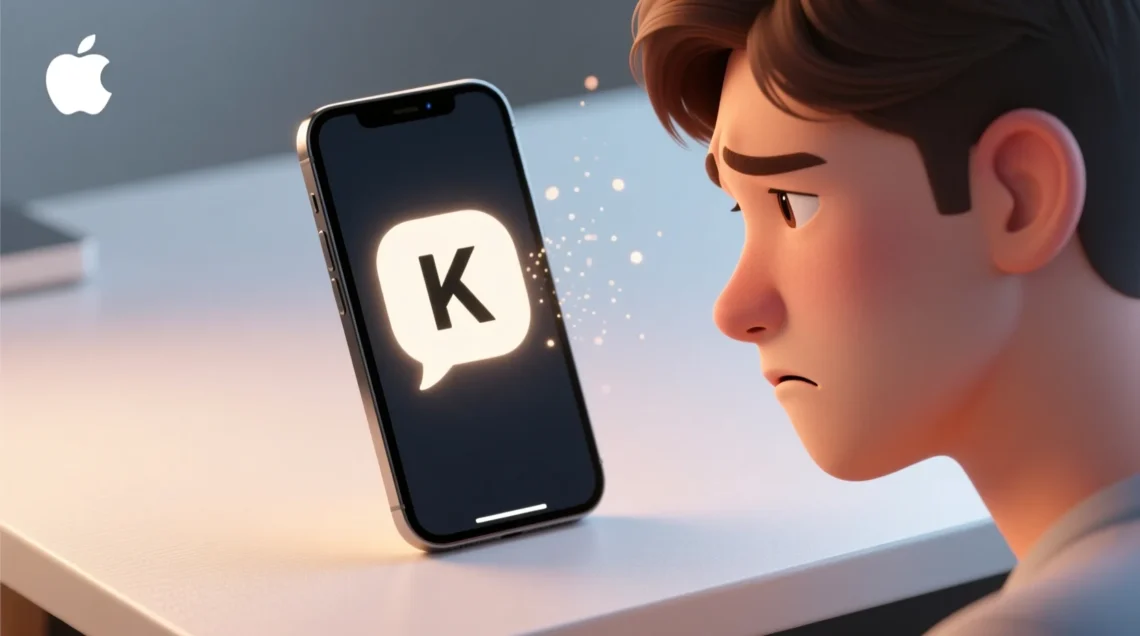
If you’ve ever received a message that simply said “K”, you probably paused for a moment wondering if the person was mad at you. I remember the first time someone replied “K” to a long paragraph — I thought they were annoyed… or done with the conversation. But over time, I realized K can mean different things, depending on tone, context, and your relationship with the person.
In this guide, you’ll learn the exact meaning of K in texting, when it’s polite, when it’s rude, and how people use it across social media and messaging platforms.
🧠 What Does “K” Mean in Texting?
In texting, K means “OK.”
It’s a super-short, one-letter acknowledgment used to show that the message was received or understood.
But there’s a catch…
“K” can also feel cold, blunt, or passive-aggressive, depending on the situation.
✔ Simple Definition:
K = OK = I got it / understood / fine
✔ Example Sentence:
“Be there in 5 min.”
“K.”
👉 In short:
K = OK, but shorter — sometimes polite, sometimes rude depending on tone.
📱 Where Is “K” Commonly Used?
You’ll see “K” across all platforms, especially where quick replies are common:
- WhatsApp 💬
- Instagram DMs
- Snapchat
- TikTok comments
- Facebook Messenger
- iMessage
- Discord chats
- Gaming chats 🎮
Tone:
Most of the time, casual, quick, or neutral — but in sensitive conversations, it can feel cold or annoyed.
💬 Examples of “K” in Real Conversations
✔ Neutral / Normal Use:
A: i’m on the way
B: k
A: got your message
B: k cool
✔ Annoyed / Passive-Aggressive Use:
A: i didn’t mean to upset you
B: k
A: so ur not coming?
B: k
✔ Friendly Use:
A: wanna play tonight?
B: k sure lol
✔ Rushed / Busy Use:
A: meeting starts in 2
B: k
✔ Dismissive Use:
A: we need to talk
B: k
🕓 When to Use and When NOT to Use “K”
✅ When to Use “K”
- When you are in a hurry
- For simple confirmations
- Between close friends who understand your texting style
- In casual conversations
- When the message doesn’t need a big response
- When you’re multitasking
- When a short acknowledgment is enough
❌ When NOT to Use “K”
- During serious conversations
- When someone is emotional
- In professional messages
- When someone wrote a long paragraph
- When someone might misinterpret your tone
- When the situation is sensitive or tense
📊 Comparison Table: When “K” Works vs When It Doesn’t
| Conversation Type | Example Phrase | Why It Works / Doesn’t |
|---|---|---|
| Friend Chat | “be right back” — “k” | Casual & fast |
| Busy Chat | “on the way” — “k” | Quick acknowledgment |
| Relationship Argument | “we need to talk about this…” — “k” | Sounds cold & dismissive |
| Work Chat | “Please approve this file.” — “k” | Too informal; use “Okay.” |
| Serious Message | “I’m really upset.” — “k” | Extremely insensitive |
| Texting a stranger | “K” | May feel rude |
🔄 Similar Slang or Alternatives to “K”
| Slang | Meaning | When to Use |
|---|---|---|
| OK | Agreement | Neutral & safe |
| kk | OK, got it | Friendly & light |
| k.” | K with a period | Annoyed tone |
| kay | OK spelled out | Soft and casual |
| okayy | Extra friendly | Cute or playful tone |
| bet | Alright / cool | Confident & casual |
🔍 Why Do People Use “K” Instead of “OK”?
⭐ It’s the fastest possible response
Just one letter — saves time.
⭐ Works in multitasking
People use it when they’re doing something else.
⭐ Short but clear
It still means “I understand.”
⭐ Sometimes to show annoyance
“K” can show that the person doesn’t want to talk further.
⭐ Habit & texting culture
Gen Z and Millennials use fast, short responses.
⚠ Neutral vs Rude: How Tone Changes “K”
Tone matters a lot in texting because there’s no voice or expression. Here’s how people interpret it:
✔ Neutral Tone
- From close friends
- In quick conversations
- During rushing
- When you both use short texts normally
❌ Rude Tone
- When the convo is serious
- When someone sends a long message and gets “K” back
- From someone who usually texts differently
- When the message ends abruptly
💡 Tip:
If you want to avoid sounding rude, use:
- “ok”
- “okay”
- “kk”
- “got it”
- “sure”
🧩 Different Variations of “K”
K
Neutral / can sound blunt.
k.
Period at the end = annoyed.
kk
Friendly, chill, often used by gamers.
Kay
Soft, sweet, more expressive.
Kk thx
Acknowledgment + gratitude.
K?
Confused tone.
K???
Sarcastic or annoyed.
🙋 FAQs
1. Does “K” mean someone is mad?
Not always — but it CAN sound annoyed depending on context.
2. Is “K” rude?
It can be, especially in emotional or serious situations.
3. Is “K” different from “OK”?
Yes — “K” is shorter and feels colder than “OK”.
4. Is “kk” better than “K”?
Yes — “kk” feels friendlier and more casual.
5. Does “K” mean the conversation is ending?
Often yes — it can signal the convo is winding down.
6. Should you use “K” at work?
No — it’s too informal for professional chats.
7. Do guys and girls interpret “K” differently?
Many believe girls see “K” as rude more often, but it varies.
📝 Mini Quiz — Test Your Understanding!
1. What does “K” mean in texting?
a) Kiss
b) OK ✔
c) Keep
2. When is “K” usually rude?
a) In casual chats
b) When someone sends a long emotional message ✔
c) When you’re busy
3. Which is the friendliest alternative?
a) K
b) kk ✔
c) k.
4. Which version signals annoyance?
a) k. ✔
b) kk
c) kay
5. Is “K” appropriate for work messages?
a) Yes
b) No ✔
📝 Conclusion
The meaning of K in texting is simple — it stands for OK, a quick acknowledgment used in casual, fast-paced conversations. But because it’s just one letter, it can also come across as cold, blunt, or annoyed if used in the wrong context.
Once you understand the tone, variations, and when to use or avoid it, texting becomes smoother and misunderstandings disappear.
Remember:
K is OK — but only in the right situation.