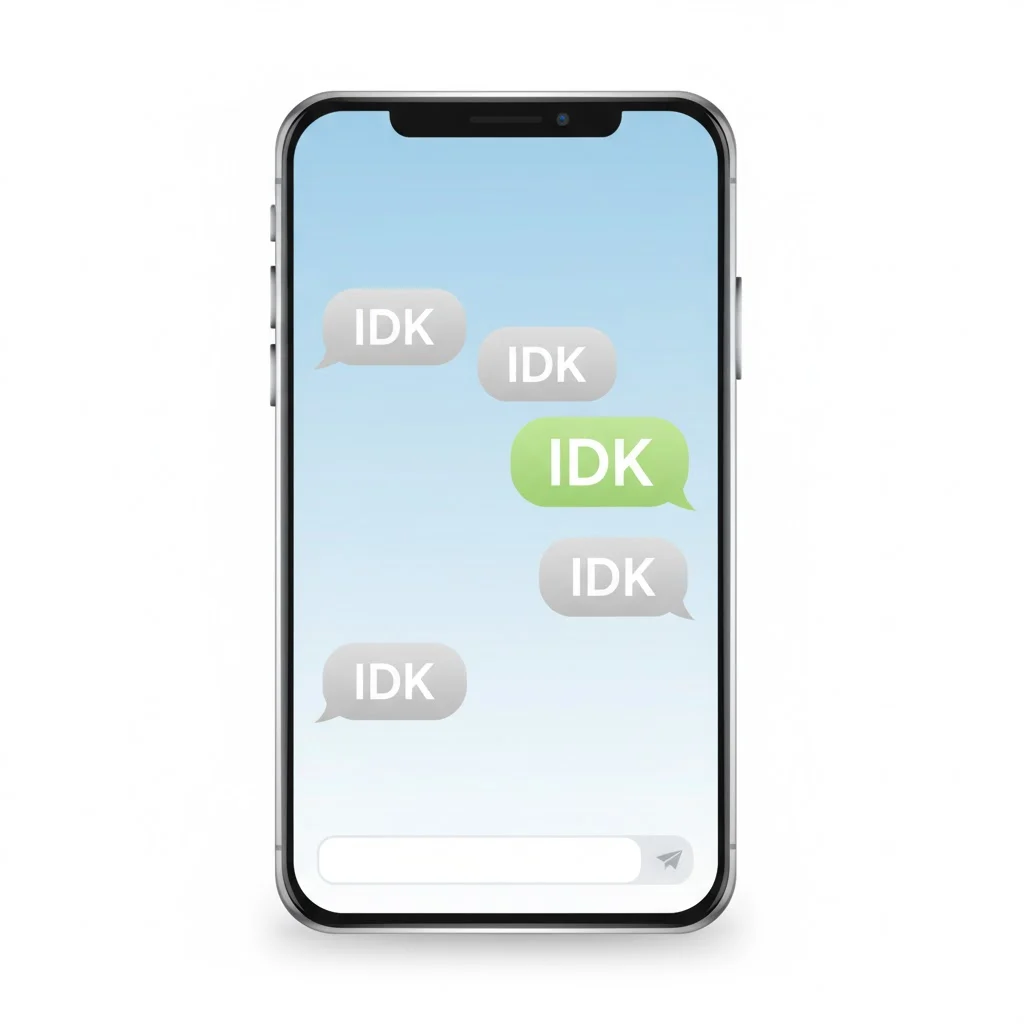
If you’ve ever been texting, chatting on social media, or gaming online, you’ve probably seen someone type “IDK.” And if you’re here, you’re likely wondering what it really means — and how to use it correctly. Whether you’re a teen learning internet slang or an adult trying to understand what younger people are saying, this guide is written directly for you.
Today, communication is faster than ever, and acronyms pop up constantly. Knowing what they mean helps you avoid awkward confusion and keeps conversations smooth. “IDK” is one of the most common shorthand expressions used worldwide, so understanding it is almost essential for texting and online chatting.
Definition & Meaning
“IDK” stands for “I don’t know.” It is a simple, casual way to express uncertainty or lack of information. People use it because it’s short, easy to type, and fits naturally in fast-paced digital conversations.
Examples:
- A: “What time is the meeting?”
B: “IDK, they didn’t tell me yet.” - A: “Should we watch a movie or play games?”
B: “IDK, you decide.” - A: “Do you think she’ll join us tonight?”
B: “IDK, she didn’t reply.”
It’s not rude unless paired with a harsh tone. It simply tells the other person you genuinely don’t have the answer.
Background & History
“IDK” began appearing widely during the early days of the internet, especially in chatrooms, forums, and instant messaging platforms. As communication shifted from long sentences to quick phrases, acronyms like LOL, BRB, BTW, and IDK became natural shortcuts. With the rise of smartphones and texting culture, “IDK” spread globally and became a universal part of online slang. Today, it’s used in messaging apps, gaming chats, emails (informal ones), and social networks. Over time, “IDK” hasn’t changed much in meaning — but its frequency has increased as more people prefer short, efficient typing.
Usage in Various Contexts
1. Texting
Used when you’re unsure about something.
Example:
A: “What’s the Wi-Fi password?”
B: “IDK, ask Ali.”
2. Social Media
People comment “IDK” when they don’t know the answer to a post or question.
3. Gaming
Gamers use it during fast chat moments:
A: “Where’s the enemy team?”
B: “IDK, checking.”
4. Casual Conversations
It helps avoid long explanations:
“IDK what to wear today.”
Common Misconceptions & Clarifications
- Misconception: IDK is rude.
Clarification: It’s only rude if used dismissively. - Misconception: IDK means you don’t want to talk.
Clarification: It simply means you lack information. - Misconception: It’s unprofessional.
Clarification: Mostly true. Prefer using full phrases at work.
Some people misread “IDK” as laziness, but it’s usually just quick communication.
Similar Terms & Alternatives
| Term | Meaning | When to Use |
|---|---|---|
| IDK | I don’t know | General uncertainty |
| IDC | I don’t care | When you’re indifferent |
| IMO | In my opinion | When guessing or giving thoughts |
| TBD | To be decided | When answer will come later |
| Unsure | Polite alternative | Professional settings |
How to Respond to “IDK”
Casual
“Okay, no worries!”
Funny
“IDK either — so we’re both clueless!”
Professional
“I understand. Could you please check and update me?”
Privacy-Focused
“No problem, tell me whenever you find out.”
Regional or Cultural Differences
“IDK” is globally understood, especially among English speakers. In South Asia, youth use it commonly in WhatsApp groups and gaming chats. In non-English-speaking countries, people still use “IDK” even if their local language is different because English internet slang is universal.
Variations in other languages include:
- Spanish users: “No sé,” but also “IDK.”
- Arabic users: “Ma a‘rif,” but still frequently use “IDK.”
Comparison With Similar Terms
| Acronym | Tone | Meaning |
|---|---|---|
| IDK | Neutral | I don’t know |
| IDKY | Confused | I don’t know why |
| IDKW | Skeptical | I don’t know what |
| DK | Very short | Don’t know |
Usage in Online Communities & Dating Apps
On platforms like Tinder, Bumble, Twitter, or Reddit, “IDK” is used when someone is unsure or doesn’t want to commit to an answer.
Example on dating apps:
A: “What’s your ideal weekend?”
B: “IDK, maybe something chill.”
In gaming communities, it helps keep responses fast during intense moments.
Hidden or Offensive Meanings
“IDK” itself is not offensive.
However, tone matters.
Saying “IDK, stop asking” can sound rude.
But alone, “IDK” is harmless.
Suitability for Professional Communication
Typing “IDK” in a workplace message may seem too casual. Instead, use:
- “I’m not sure.”
- “Let me check.”
- “I’ll confirm and update you.”
These sound more polished and professional.
FAQs
1. Is IDK rude?
Not usually — unless the tone is dismissive.
2. Is IDK formal?
No, use alternatives at work.
3. Can adults use IDK?
Absolutely — it’s universal.
4. Does IDK mean someone is ignoring you?
Not necessarily; maybe they truly don’t know.
5. Is IDK slang or an acronym?
It’s both.
Conclusion
“IDK” is one of the simplest and most common acronyms in digital communication. It expresses uncertainty quickly and clearly, whether used in texting, gaming, or social media.
By understanding how and when to use it and how to respond you’ll communicate more naturally online and avoid misunderstandings.
Slang evolves constantly, but “IDK” remains a timeless part of modern digital language.