Hey there, social-media user, texter or gamer 👋!
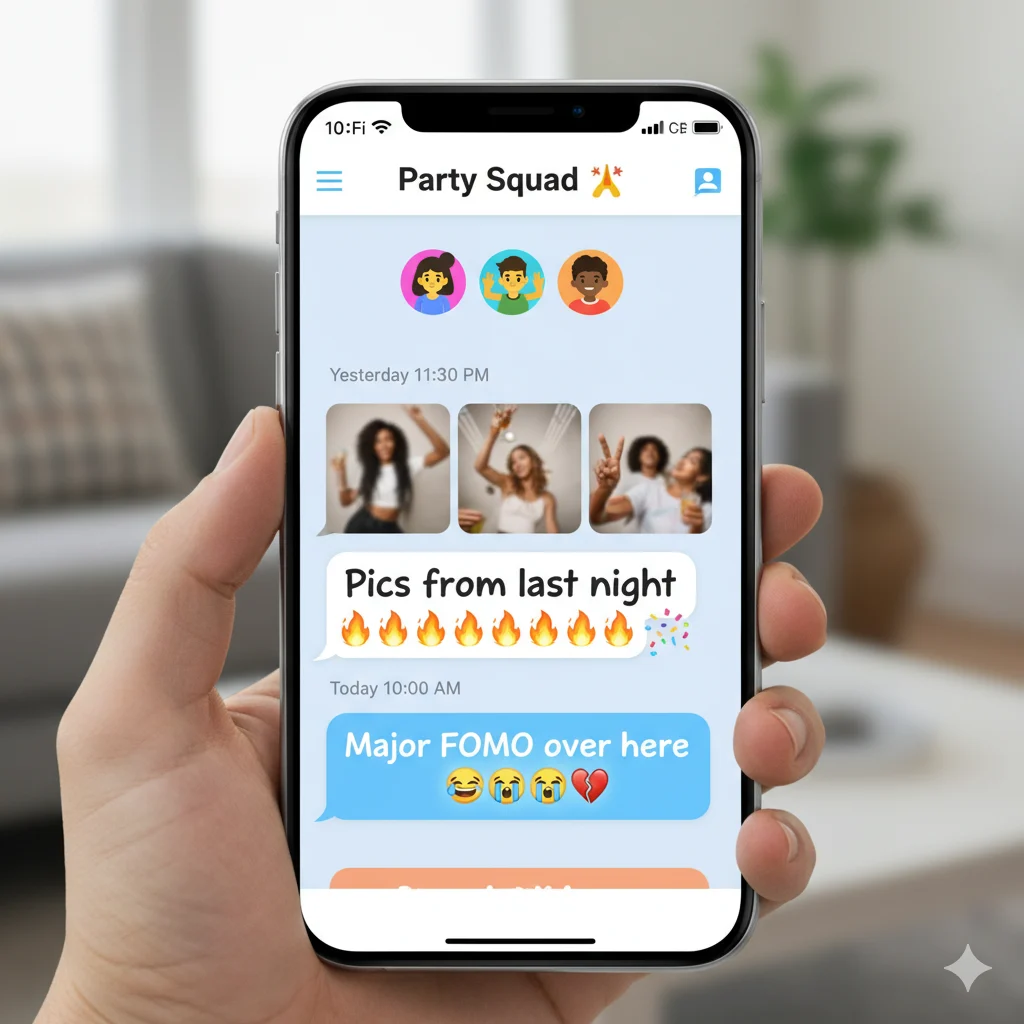
Have you ever scrolled through Instagram or Snap and thought: “Why am I feeling this weird pressure?” Maybe someone posts a big party and you reply: “Total FOMO right now.”
If you’re someone who chats with friends, plays online, or just wants to stay on top of modern slang, this is for you.
Today we’ll break down exactly what “FOMO” means in text, where you’ll see it (TikTok, WhatsApp, gaming chats), and how it affects your daily convo.
Understanding this abbreviation helps you stay in the loop — and avoid that uncomfortable “everyone else is doing it” feeling.
Let’s dive in.
Definition & Meaning
So, what does FOMO mean in text?
👉 FOMO stands for “Fear Of Missing Out.”
In simple terms: it’s the anxiety or worry you feel when you believe others are having fun, doing something interesting, or taking advantage of an opportunity — and you’re not.
Dialogue Examples:
Friend A: “Everyone’s going to that festival tonight.”
Friend B: “Seriously? Now I have major FOMO.”
Here, Friend B means I’m afraid of missing out on fun.
Gamer X: “Skipped the team chat and now I hear they unlocked the rare skin.”
Gamer Y: “Oof, that’s the worst FOMO.”
Here, again, FOMO = fear of being left behind.
Meta point: The presence of fear + missing out = FOMO.
Background & History
The term “Fear of Missing Out” existed longer, but the acronym FOMO became popular in the early-2000s.
According to Patrick J. McGinnis, it appeared around 2004 in a Harvard Business School publication.
As social media, smartphones, and real-time posts exploded, the feeling of being late or being out intensified — and FOMO became a digital-age phenomenon.
Today, you’ll spot FOMO in:
- Text messages and WhatsApp chats
- Social media captions and stories
- Gaming lobbies and online communities
- Marketing campaigns (“Don’t miss out – avoid FOMO”).
Usage in Various Contexts
Let’s see how FOMO plays out in different settings:
Texting & Messaging
Layla: “I wasn’t going to the beach…”
Zain: “With all those pics, now I’ve got FOMO.”
Here, FOMO = the worry that Layla’s missing or being left out.
Social Media & Comments
“Scrolling through vacation pics again = instant FOMO.”
In this case, the post triggers the viewer’s fear of missing a fun experience.
Gaming / Online Communities
Player 1: “Everyone’s upgrading to the gold pass.”
Player 2: “Man, the FOMO is real.”
Here it’s about missing an opportunity or special advantage.
Professional / Marketing Contexts
Companies use FOMO in ads:
“Sale ends midnight. Don’t let FOMO stop you.”
Here FOMO is leveraged as a psychological push.
Common Misconceptions & Clarifications
❌ Misconception: FOMO = just wanting to join fun
Not exactly — it includes anxiety or worry about missing out, not simply wanting to participate.
❌ Misconception: FOMO is always about big events
No— it can be small: missing a chat, a meme, or a trend still triggers FOMO.
✅ Clarification: FOMO vs JOMO
- FOMO: Fear of Missing Out
- JOMO: Joy of Missing Out (enjoying what you are doing instead of what you aren’t)
Good to know for tone.
Similar Terms & Alternatives
| Term | Meaning | Usage |
|---|---|---|
| YOLO | You Only Live Once | Emphasises living in the moment |
| IDK | I Don’t Know | Knowledge-gap, not about missing out |
| FOMO | Fear Of Missing Out | Anxiety-driven feeling |
| JOMO | Joy Of Missing Out | Opposite of FOMO |
If someone doesn’t know “FOMO,” you can clarify:
“FOMO = the feeling you get when you think you might miss something fun.”
How to Respond to This Term
When someone says FOMO, your reply depends on context:
Casual
Friend: “I skipped the event but now I’ve got FOMO.”
You: “Totally get it—next one we’ll go together!”
Funny
Friend: “Watching their travel pics = full on FOMO.”
You: “Don’t worry — I found cheap flights under FOMO control 😂.”
Professional
In a formal setting:
Colleague: “I feel some FOMO from missing that meeting.”
You: “No worries—here’s the recap and next steps.”
Privacy-conscious / Empathetic
You: “I hear you. FOMO is real. Do what’s right for you.”
Shows understanding without pressure.
Regional or Cultural Differences
- In the US, UK, Canada: FOMO is widely used and understood.
- In digital-native communities globally (Asia, Middle East): You might still see “FOMO” but also local equivalents.
- In contexts other than social fun (finance, crypto): FOMO means missing an investment opportunity.
- Cultural tone: Some regions might view FOMO as negative (anxiety) while others use it lightly (just missing out).
Comparison with Similar Terms
| Abbreviation | Meaning | Common Platform | Formality |
|---|---|---|---|
| FOMO | Fear Of Missing Out | Social media, texting | Informal |
| JOMO | Joy Of Missing Out | Blogs, self-help posts | Semi-formal |
| YOLO | You Only Live Once | Instagram captions, youth slang | Very informal |
| IDK | I Don’t Know | All chats | Informal |
Usage in Online Communities & Dating Apps
On apps like Tinder or Bumble:
“Saw your hiking pics—FOMO just hit. Let’s plan next weekend?”
Here FOMO is used to express interest and invite inclusion.
In online communities (gaming, forums):
“They unlocked the new raid already—I got FOMO hard.”
Here too it’s driven by missing progress or status.
Tip: Use FOMO when you want to connect via shared experience or to express mild regret for missing out.
Hidden or Offensive Meanings
Good news: FOMO has no outright offensive meaning.
Caution: If used in a serious context (e.g., medical, legal) it may minimize real feelings of exclusion or anxiety. So tone matters.
In professional chats or sensitive contexts, it’s better to say: “I feel left out” or “I feel anxious about not being included.”
Suitability for Professional Communication
In workplaces, using “FOMO” casually can appear unprofessional.
Better alternatives:
- “I’m worried I might miss the opportunity.”
- “I don’t want to be left behind this time.”
Use full phrases for clarity and tone.
FAQs
1. What does FOMO mean in text?
It means “Fear Of Missing Out” — a feeling of anxiety about missing an experience.
2. Is FOMO slang only for parties?
No — it applies to jobs, trends, travel, social posts, investments, basically anything you might feel left out of.
3. Can FOMO be good?
Sometimes it motivates action, but often it creates unnecessary pressure and stress.
4. How do I avoid FOMO?
Focus on what you have, limit constant social comparisons, and practice gratitude or JOMO.
5. Is FOMO appropriate in business emails?
Not recommended. Use clearer, more formal phrasing.
Conclusion
So now you’re in the know: FOMO stands for Fear Of Missing Out — that tug you feel when you think others are having the time of their lives and you’re not part of it. It shows up in texts, social posts, gaming chats and even marketing.
Use it to connect, express a missed opportunity or tag a feeling — while being mindful of tone, context and your audience.
Whether you’re feeling FOMO or avoiding it, you’re now ready to handle it like a pro.