Hey there, social media user or casual texter 👋!
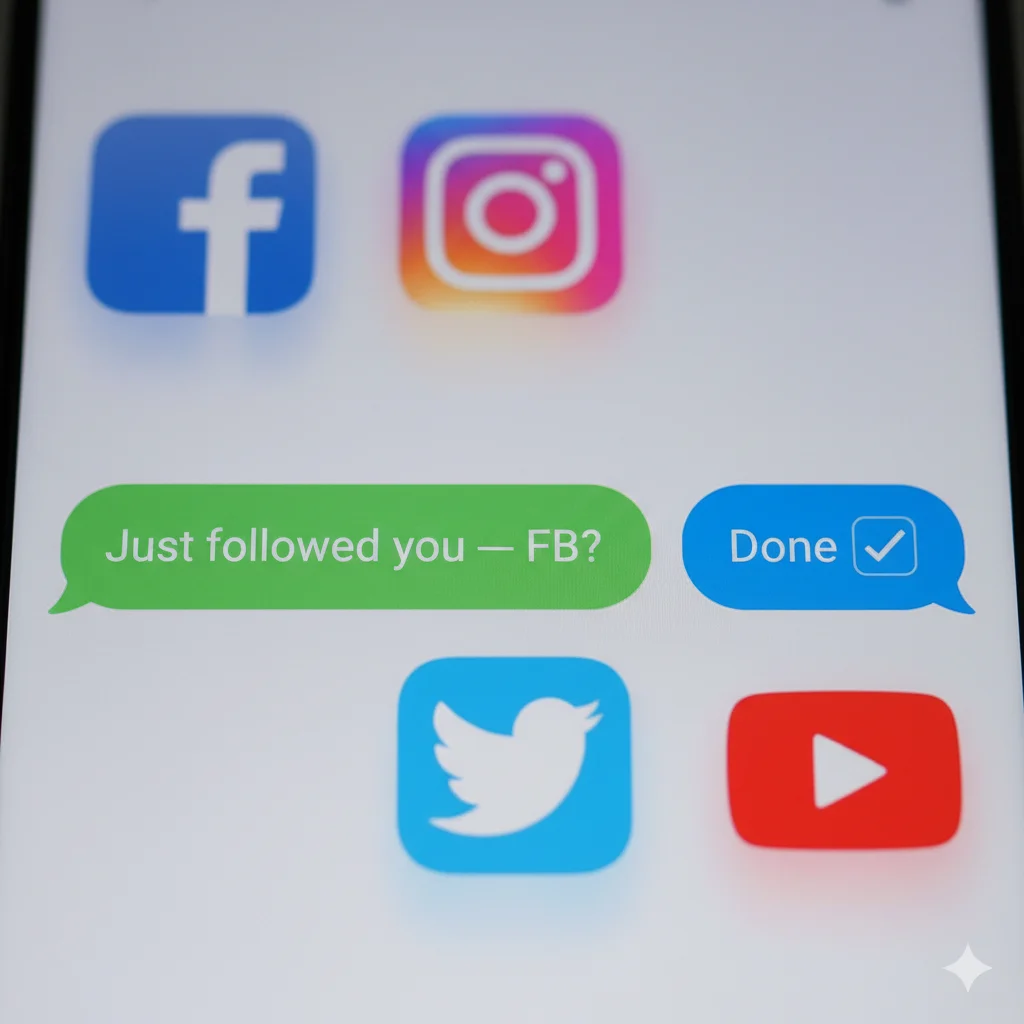
Ever got a message that says “Just followed you — FB?” or someone drops “See it on my FB story” and you pause wondering what exactly “FB” means in this chat?
If you use apps like WhatsApp, Instagram, Snapchat, or play games online — this guide is for you.
Today we’ll uncover what “FB” means in text messages, explore its different meanings, and show you how to use or respond to it without confusion.
Understanding this helps you stay in the loop, communicate clearly, and avoid mis-reading chats. Let’s dive in.
Definition & Meaning
So what does FB mean in text?
👉 The most common meanings are:
- “Follow Back” — asking someone to follow you after you’ve followed them.
- “Facebook” — referring to the platform itself.
- It can also mean things like “Feedback” in a work context.
Examples:
Example 1 (social media):
User A: “Just followed your page — FB?”
User B: “Done ✅”
Here “FB” = “Follow Back”.
Example 2 (casual talk):
Friend: “I posted pics of the trip on my FB.”
You: “Nice — I’ll check them now.”
Here “FB” = “Facebook”.
Example 3 (work chat):
Colleague: “Can you send your FB on the report by EOD?”
Here “FB” = “Feedback”.
So depending on context — chat, platform, tone — “FB” can have different meanings.
Background & History
Abbreviations like “FB” emerged with mobile texting and social media growth.
The rise of Facebook in the mid-2000s made “FB” a common shorthand for the platform.
As social media culture evolved, “FB” picked up new meanings — especially among younger users and across platforms like Instagram and TikTok.
For instance, “Follow Back” became common in influencer and engagement-driven chats.
Today, “FB” is one of the most searched acronyms in social chats and is often listed among the most confusing internet abbreviations.
Usage in Various Contexts
Let’s look how “FB” shows up across different situations:
1. Texting & Messaging
Sam: “I followed you, FB?”
Alex: “Yep, thank you!”
→ Here “FB” = “Follow Back”.
2. Social Media Comments
On Instagram:
“Nice feed 🔥 — FB me if you post more art.”
Here “FB” = “Follow Back”.
3. Casual References to Facebook
Linda: “See more pics on my FB.”
Mike: “Cool, I’ll check right now.”
Here “FB” refers to the Facebook platform.
4. Work or Professional Setting
Boss: “Need your FB on the draft by noon.”
You: “Will send you by 11.”
Here “FB” = “Feedback”.
5. Potential Alternative Meanings
In less common usage, “FB” might mean something else (e.g., “Full-Body photo” in fashion, or something slangy).
Common Misconceptions & Clarifications
❌ Misconception: “FB” always means Facebook
Not true — often it means “Follow Back,” especially in social media chats.
❌ Misconception: “FB” = Feedback in all cases
Unless you’re in a professional context, “feedback” meaning may not apply.
✅ Clarification Tip:
If someone writes “FB?” after you followed them or liked their post — they likely want a “follow back”.
If someone mentions “FB” when talking about pics or a profile — they likely mean “Facebook”.
Similar Terms & Alternatives
| Term | Meaning | Example |
|---|---|---|
| L4L | Like for Like | “L4L if you like my post.” |
| S4S | Shoutout for Shoutout | “S4S?” |
| IDK | I Don’t Know | Chat filler |
| FB | Follow Back / Facebook / Feedback | Depending on context |
When you see “FB”, think of what platform or setting you’re in — follower-chat, platform mention, or feedback request.
How to Respond to “FB”
Casual (social media):
User: “Just followed you — FB?”
You: “Done! Your turn 😊”
Friendly (platform mention):
Friend: “Check my FB for pics from last night.”
You: “On it! Where’s the link?”
Professional (feedback):
Colleague: “Need your FB on the deck by 5.”
You: “Sure, will review and send you notes shortly.”
Privacy-conscious:
If you’re unsure:
“Do you mean follow back or check my Facebook?”
This clarifies without misunderstanding.
Regional or Cultural Differences
In English-speaking countries like the US, UK, Canada, using “FB” to mean “Follow Back” or “Facebook” is common.
But in other regions, you might find the full word “Facebook” being used more often instead of “FB”.
Also, slang use like “FB” = “Follow Back” tends to be more prevalent among younger users, influencers, and online communities globally.
Always consider the age group and platform.
Comparison with Similar Terms
| Abbreviation | Meaning | Use Case |
|---|---|---|
| FB | Follow Back / Facebook / Feedback | Social media, work |
| L4L | Like for Like | Engagement posts |
| S4S | Shoutout for Shoutout | Growth focused |
| IDK | I Don’t Know | General chat |
Usage in Online Communities & Dating Apps
On platforms like Tinder or Bumble you might see:
“Check my FB for more pics 😉”
Which means: “Check my Facebook”.
In Instagram influencer circles:
“FB me once you follow — we’ll support each other.”
Which means: “Follow Back”.
In gaming/across forums: “FB” as feedback or Facebook may appear less, but “Follow Back” can appear in group chat invites.
Hidden or Offensive Meanings
“FB” is generally safe slang, but some less common meanings exist:
- It might stand for “F*** Buddy” in adult slang contexts.
- If someone uses “FB” without context, it could be misleading.
Always check tone, platform, and who you’re talking with.
Suitability for Professional Communication
In a workplace email or formal document, avoid “FB” unless you’ve defined it. Instead use full phrases:
- “Please provide your feedback by tomorrow.”
- “Could you follow back on the platform?”
Using “FB” in formal settings may confuse recipients or appear unprofessional.
FAQs
1. What does FB mean in texting?
Usually “Follow Back” or “Facebook”. Sometimes “Feedback”.
2. Is FB slang?
Yes — often used in informal chats, social media, and younger demographics.
3. Can FB mean something bad?
In rare adult contexts, yes — it might mean “F*** Buddy”. Use caution.
4. How do I know which meaning applies?
Look at the context: social media follow chat → “Follow Back”; discussion of pics/site → “Facebook”; work review chat → “Feedback”.
5. Is FB okay for professional emails?
Better avoid — use full words to ensure clarity and professionalism.
Conclusion
So now you know: FB isn’t just “Facebook” — it can mean “Follow Back”, “Feedback”, and more depending on context.
Use it in casual chats, social media, and when you’re comfortable with your audience’s slang. In formal or professional settings, stick to full terms for clarity.
Next time someone texts “FB?”, you’ll know exactly what they mean — and you’ll be ready to reply confidently.