Hey friend 👋 — ever received a quick message like “What’s your ETA?” or “ETA 20 mins” and wondered if it meant something more than just “time”? If you’re active on chat apps, gaming platforms, social media, or coordinating meet-ups, you might’ve seen the term “ETA” pop up a lot.
Whether you’re texting pals, scheduling work, or planning a delivery, understanding what “ETA” really means in text conversations can save time and avoid confusion. In this guide, we’ll break down exactly what ETA means, when and where to use it, why it matters, and some tips on using it right in both casual and semi-professional chats. Let’s jump in!
Definition & Meaning
ETA stands for “Estimated Time of Arrival.” It’s the shorthand way to ask or tell when someone or something is expected to arrive.
Example:
Friend 1: “What’s your ETA to the café?”
Friend 2: “About 20 mins — stuck in traffic.”
Here, Friend 2 uses ETA to say how long until arrival.
In texting or online chat, it’s used for all kinds of contexts: travel, lunch meet-ups, deliveries, even project deadlines. The term helps keep things brief and clear.
Key takeaway:
✅ Use ETA when you want to give or ask for a time estimate.
🚫 It’s not typically used to mean completion time of a task unless you clarify.
Background & History
The concept of “Estimated Time of Arrival” comes from transportation and logistics — trains, buses, flights, ships used “ETA” to indicate when they would reach their destination. As texting and mobile communication became faster, people borrowed this abbreviation into everyday conversation for meet-ups, deliveries, and events.
By the 2010s, with smartphones and instant messaging, using “ETA” became common among friends, work chats, group convocations, and social media posts. It’s now a global shorthand understood across cultures as “how soon will this happen / you arrive?”
Usage in Various Contexts
Texting / Mobile Chat
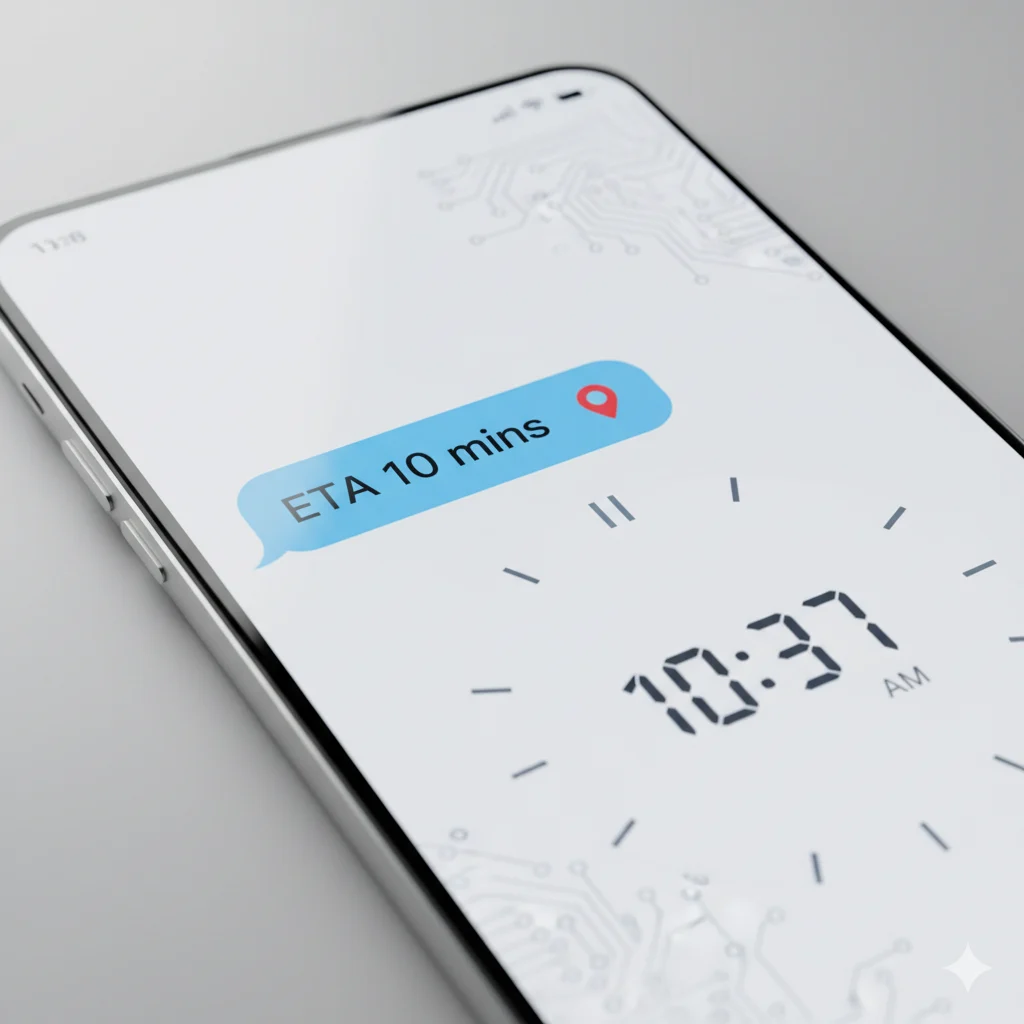
A: “Leaving now, ETA 10 mins.”
B: “Cool – grab coffee, I’ll wait.”
Social Media / Comments
“New video dropping tonight — ETA 8 PM! 🚀”
Work or Semi-Professional Settings
Colleague: “ETA on the draft report?”
You: “ETA tomorrow morning — finishing touches.”
Gaming / Online Communities
“ETA on raid start?” (Meaning: “When are we starting the game/mission?”)
Across all these, the purpose of ETA remains: to communicate timing clearly and quickly.
Common Misconceptions & Clarifications
- ❌ Misconception: ETA always means “exact time.”
✔️ Clarification: It’s an estimate. Plans and delays happen, so the “E” in ETA is important. - ❌ Misconception: ETA only belongs in formal/travel contexts.
✔️ Clarification: It’s perfectly acceptable in casual chat, as long as the meaning is clear. - ❌ Misconception: ETA can always mean “Edited To Add” or similar.
✔️ Clarification: Some forums use “ETA” to mean “Edited To Add,” but that’s niche and not standard for general texting.
Similar Terms & Alternatives
| Term | Meaning | Usage |
|---|---|---|
| ETD | Estimated Time of Departure | Travel/transport context |
| TBD | To Be Determined | When time is unknown |
| IDK | I Don’t Know | Informal, different meaning |
| ETA | Estimated Time of Arrival | Broad, arrival-oriented |
Use these when the exact concept of arrival or timing differs.
How to Respond to “ETA”
- Casual response:
Friend: “What’s your ETA?”
You: “About 15 mins. See you soon!” - Professional/Work response:
Colleague: “What’s your ETA on the review?”
You: “ETA late afternoon — I’ll update you as soon as done.” - Privacy-conscious or non-committal:
“I’m running late — ETA unknown, I’ll confirm ASAP.” - Funny response (among friends):
“ETA: when my taxi finally moves 😂”
Regional or Cultural Differences
In English-speaking countries the use of ETA is widespread (US, UK, Canada, Australia). However:
- Some younger users may reply simply “20 mins” rather than saying “ETA 20 mins.”
- Non-native English speakers may prefer full phrase like “I’ll arrive in 20 minutes” if abbreviations are less familiar.
So understand your audience — if they’re unfamiliar, spell it out.
Comparison with Similar Terms
| Abbreviation | Meaning | Common Use | Formality |
|---|---|---|---|
| ETA | Estimated Time of Arrival | Travel, meet-ups, chat | Casual to semi-formal |
| ETD | Estimated Time of Departure | Transport, flight info | Semi-formal |
| TBD | To Be Determined | Plans without fixed time | Neutral |
| IDK | I Don’t Know | Casual chat | Informal |
Usage in Online Communities & Dating Apps
On dating apps like Tinder or Bumble:
“ETA to our coffee date?” — prompts a time estimate which can help fix plans.
On gaming forums or streaming chats:
“ETA on stream starting?” — quick check when the event will start.
It works because people like knowing when, especially online.
Hidden or Offensive Meanings
ETA is not offensive inherently. But:
- If someone uses ETA and doesn’t actually show up, it can become a point of annoyance.
- Avoid using it in contexts where timing is irrelevant — it may confuse.
Overall, it’s safe — just be accurate and polite.
Suitability for Professional Communication
Yes — ETA can be used in semi-professional settings (emails, project updates). For fully formal contexts:
- Rather than “What’s your ETA?” use: “Could you please provide an estimated time of arrival/completion?”
- In reports: “ETA for delivery is 3 PM.”
Ensure your audience understands abbreviation and that it is appropriate for the setting.
FAQs
1. What does ETA mean in text?
→ It stands for Estimated Time of Arrival.
2. Can I use ETA in a professional email?
→ Yes, if your audience knows the abbreviation, but in very formal documents spell it out.
3. Is ETA always accurate?
→ No — it’s an estimate, not a guarantee. Use it as a guideline.
4. What’s the difference between ETA and ETD?
→ ETA = arrival time estimate; ETD = departure time estimate.
5. Does ETA have other meanings?
→ Yes, in some forums it may be used as “Edited To Add”, but that’s informal and nonstandard.
Conclusion
By now you understand that ETA is a simple but powerful abbreviation for Estimated Time of Arrival. Whether you’re catching up with friends, waiting for a delivery, or coordinating an event, using “ETA” helps communicate timing quickly and clearly. Just remember: it’s an estimate, not a guarantee. Use it in casual or semi-formal chats — and when in doubt, spell it out for clarity.
Next time someone asks “What’s your ETA?” you’ll know exactly what they mean — and you’ll be ready to answer smoothly. 😊